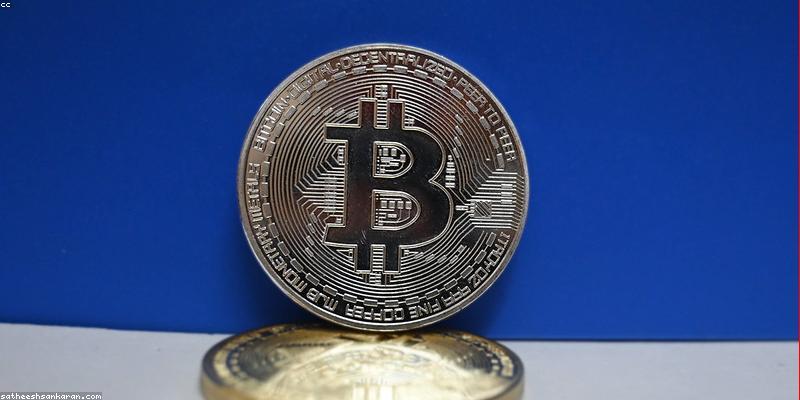
Bitcoin Slides Toward $58,800 Support as Options Traders Hedge Against Further Downside
Bitcoin and ether are testing critical multiyear support levels as market participants brace for potential further declines, with options traders increasingly purchasing downside protection despite relatively calm volatility metrics.
The leading cryptocurrency Bitcoin fell 1.5% on Tuesday after failing to maintain a position above the psychologically significant $60,000 threshold on Monday. Currently trading around $59,250, the asset appears poised to challenge recent weekend lows near $58,800. Meanwhile, ether (ETH) declined 1.73% since midnight UTC, settling at approximately $1,580 after repeatedly failing to sustain momentum above the $1,640 resistance level.
Both digital assets are now approaching technically important price zones that have historically provided buying interest. Ether has demonstrated resilience at this level previously, bouncing from similar price points in April 2025 and October 2023. Bitcoin’s current positioning represents its lowest trading range since late 2024, suggesting that a decisive break below this support could leave both assets without an immediately apparent floor for price stabilization.
The broader altcoin sector exhibited exacerbated downward pressure on Tuesday, particularly within the decentralized finance (DeFi) segment. Tokens including ethena (ENA), jupiter (JUP), and ether.fi (ETHFI) experienced declines ranging from 3.3% to 7.5% as risk appetite continued to diminish across speculative assets. This contrast highlights the divergent performance between cryptocurrency markets and traditional financial instruments.
In traditional markets, U.S. equity indices displayed remarkable stability since midnight trading. The S&P 500 and Nasdaq 100 futures registered modest gains of 0.03%, while the Dollar Index (DXY) added 0.25% in value. This divergence underscores the current decoupling between digital asset volatility and conventional market movements, a pattern that has become increasingly pronounced during recent macroeconomic uncertainty.
Derivatives Market Signals Increasing Downside Protection Demand
Analysis of derivatives markets reveals intriguing positioning among professional traders. While overall futures open interest remains relatively subdued for major cryptocurrencies like Bitcoin, ether, and XRP, specific tokens are showing notable activity. Dogecoin (DOGE) open interest has surged to 16 billion tokens—the highest level observed since the October 10 market crash—up from 13 billion just one day prior.
However, this increase in positioning appears predominantly bearish in nature. Negative funding rates combined with negative 24-hour open interest-adjusted cumulative volume delta indicate aggressive selling pressure. The cumulative volume delta (CVD) metric suggests sellers are more actively hitting bid prices to execute their bearish strategies, reflecting genuine conviction in near-term downside potential.
Meanwhile, Bitcoin options markets continue to demonstrate persistent demand for downside protection. On Deribit exchange, Bitcoin put options maintain a 10%+ premium relative to equivalent call options across all expiration timeframes—a structure that historically signals trader concern about potential price declines. This premium exists despite Bitcoin’s 30-day implied volatility index (BVIV) declining by 11% to 44% on Monday and stabilizing around that level, with ether’s equivalent volatility measure (EVIV) showing similar readings.
An interesting derivatives structure observed in recent block trades was a Bitcoin short straddle—an options strategy involving the simultaneous sale of both put and call options at the same strike price. This approach profits when Bitcoin trades within a narrow range with minimal volatility, suggesting some institutional players anticipate near-term consolidation rather than dramatic directional movement.
Select Tokens Show Resilience Amid Broad Weakness
Despite the prevailing bearish sentiment, select digital assets are demonstrating relative strength. Stellar Lumens (XLM) continues to maintain bullish momentum following an announcement from the Depository Trust & Clearing Corporation (DTCC)—the largest U.S. financial markets clearinghouse—regarding plans to connect its tokenized securities platform to the Stellar network during the first half of 2027. This development initially catalyzed a 100% price rally in late May and appears to be sustaining positive sentiment.
Another notable outperformer is Lighter (LIT), the native token of a decentralized perpetual exchange. LIT has gained approximately 23% over the past week, including double-digit returns within the last 24 hours alone. Market analysts attribute this performance to structural similarities with Hyperliquid’s HYPE token, which has itself outperformed many peers despite experiencing a modest 2.2% pullback on Tuesday to approximately $65.30.
HYPE’s price chart currently exhibits characteristics of a consolidation pattern rather than a corrective phase, marked by successive higher highs accompanied by higher lows—a technical formation that often precedes continuation of the existing trend rather than a reversal.
Market Context and Investor Considerations
The current market environment presents a complex tableau for cryptocurrency investors. On one hand, traditional risk indicators suggest relative calm—equity markets show stability, dollar strength is moderate, and volatility metrics remain subdued. On the other hand, cryptocurrency-specific metrics reveal growing protective positioning among sophisticated market participants, particularly in the options market where downside puts command significant premiums.
This dichotomy may reflect differing investor bases and motivations between traditional and digital asset markets. While institutional participation in cryptocurrencies has grown substantially, the asset class retains characteristics of a speculative, sentiment-driven market where technical levels and narrative developments (like the DTCC-Stellar announcement) can disproportionately influence price action compared to traditional valuation metrics.
For market participants, the current situation underscores the importance of monitoring both on-chain metrics and derivatives positioning when assessing near-term risk. The combination of testing long-term support levels alongside elevated demand for downside protection in options markets creates a scenario where a decisive break below key technical levels could trigger accelerated selling, while sustained holding above these thresholds might set the stage for a potential mean-reversion bounce.
Frequently Asked Questions
What does it mean when Bitcoin tests “key support levels”?
In technical analysis, a support level represents a price point where historical buying interest has previously prevented further declines. When Bitcoin “tests” this level, it means the price is approaching or touching this zone where buyers have historically stepped in. If buying interest materializes at this level, the price may stabilize or bounce upward. However, if the price breaks decisively below support with strong selling volume, it often indicates weakening bullish momentum and could lead to further declines toward the next lower support level.
Why are options traders paying up for downside protection despite low volatility metrics?
Options traders may purchase downside protection (put options) even when volatility indicators like BVIV appear low for several reasons: 1) They may anticipate specific catalysts (regulatory announcements, macroeconomic events) not yet reflected in current volatility pricing; 2) They might be hedging existing long positions in the spot market; 3) The put-call premium could reflect asymmetric risk perception—traders fearing sharp declines more than they anticipate equivalent rallies; 4) Institutional investors often use options for portfolio insurance regardless of current volatility levels, treating them as a standard risk management tool similar to how equity investors use put options on stock indices.
How do DeFi tokens typically perform during Bitcoin downturns?
Historically, DeFi tokens tend to exhibit higher volatility and sharper declines than major cryptocurrencies like Bitcoin and ether during market downturns. This occurs for several structural reasons: DeFi protocols often involve complex smart contract systems with potential vulnerability concerns; many DeFi tokens have lower liquidity and thinner order books than established cryptocurrencies; and during risk-off periods, investors frequently rotate from higher-risk speculative assets (including many DeFi projects) toward perceived safer holdings like Bitcoin and ether. However, as demonstrated in this instance, individual DeFi tokens can deviate from this pattern when specific positive developments (such as partnership announcements or technological upgrades) create token-specific catalysts that override broader market trends.
